How to Choose the Right Desert Buggy for Your Dubai Adventure
Understanding What Makes a Desert Buggy Suitable for Dubai's Terrain
Dubai's desert landscape is unlike any other. The dunes shift constantly, the sand can be soft or compacted, and the temperatures demand reliable equipment. Choosing the right buggy for this environment is not just about speed or looks. It is about matching the vehicle to the conditions you will actually face. A machine that works well on a flat gravel track may struggle on a steep, loose dune. Before you book or rent, it helps to understand the basic types of desert buggies available and what each one does best.
Most buggies fall into two broad categories: recreational models designed for casual riders and performance-oriented machines built for more demanding trails. The recreational buggies usually have smaller engines, simpler controls, and a focus on comfort and safety. They are a good fit if you plan to follow a guide at a moderate pace and want to enjoy the scenery. Performance buggies, on the other hand, come with larger engines, better suspension, and often a more aggressive seating position. They can handle faster speeds and steeper climbs but require more experience from the driver. When you search for a buggy desert dubai experience, knowing which category suits your skill level makes the decision much easier.
Consider the Type of Buggy: Two-Seater vs. Four-Seater
The size of the buggy matters more than most people think. A two-seater buggy is lighter, more maneuverable, and usually faster on technical sections. It can turn tighter and climb dunes with less effort because it carries less weight. If you are riding alone or with one passenger, a two-seater gives you the most responsive feel. You will notice the difference when the trail gets narrow or the sand is particularly soft.
A four-seater buggy offers more space and stability. It is heavier, which can be an advantage on flat stretches but a disadvantage on loose sand. The extra weight means the engine has to work harder, and the turning radius is wider. However, if you are with family or friends and want to share the experience, a four-seater is the practical choice. Some models have adjustable seating and storage compartments, making them more comfortable for longer excursions. Think about who will ride with you and how much luggage or water you need to carry. That will guide your choice.
Engine Power and Performance
The engine is the heart of any desert buggy. In Dubai's desert, you need enough power to climb dunes that can be several stories high. A buggy with a small engine might struggle to reach the top of a tall dune, especially if the sand is loose and the angle is steep. Look for buggies with engines in the range that is common for your planned route. More power gives you a safety margin when you need to accelerate out of a soft patch or maintain momentum on a long climb.
That said, raw power is not everything. A buggy with a very powerful engine can be harder to control on uneven ground. The throttle response, the weight distribution, and the quality of the suspension all play a role. A well-balanced buggy with moderate power often performs better than an overpowered one with poor handling. If you are new to desert riding, choose a buggy that lets you grow into the experience rather than one that feels intimidating from the first turn. Many rental operators in Dubai offer different power levels, so you can match the machine to your confidence.
Suspension and Comfort on the Dunes
Desert trails are not smooth roads. The surface changes from hard-packed sand to soft powder to occasional rocks or gravel. A good suspension system absorbs those variations and keeps the buggy stable. Without it, every bump transfers into your body, making the ride tiring and less enjoyable. For longer excursions, comfort becomes a real factor. You do not want to spend hours bouncing over ridges in a buggy that has minimal shock absorption.
There are two main types of suspension in desert buggies: independent suspension and solid axle suspension. Independent suspension allows each wheel to move separately, which gives a smoother ride over uneven terrain. Solid axle systems are simpler and more durable but can be rougher. For most recreational riders, independent suspension is the better choice. It reduces fatigue and helps the buggy maintain traction when one wheel lifts off the ground. If you are planning a buggy desert dubai tour that lasts more than an hour, pay attention to the suspension quality. It will make the difference between a thrilling ride and an exhausting one.
Safety Features and What to Look For
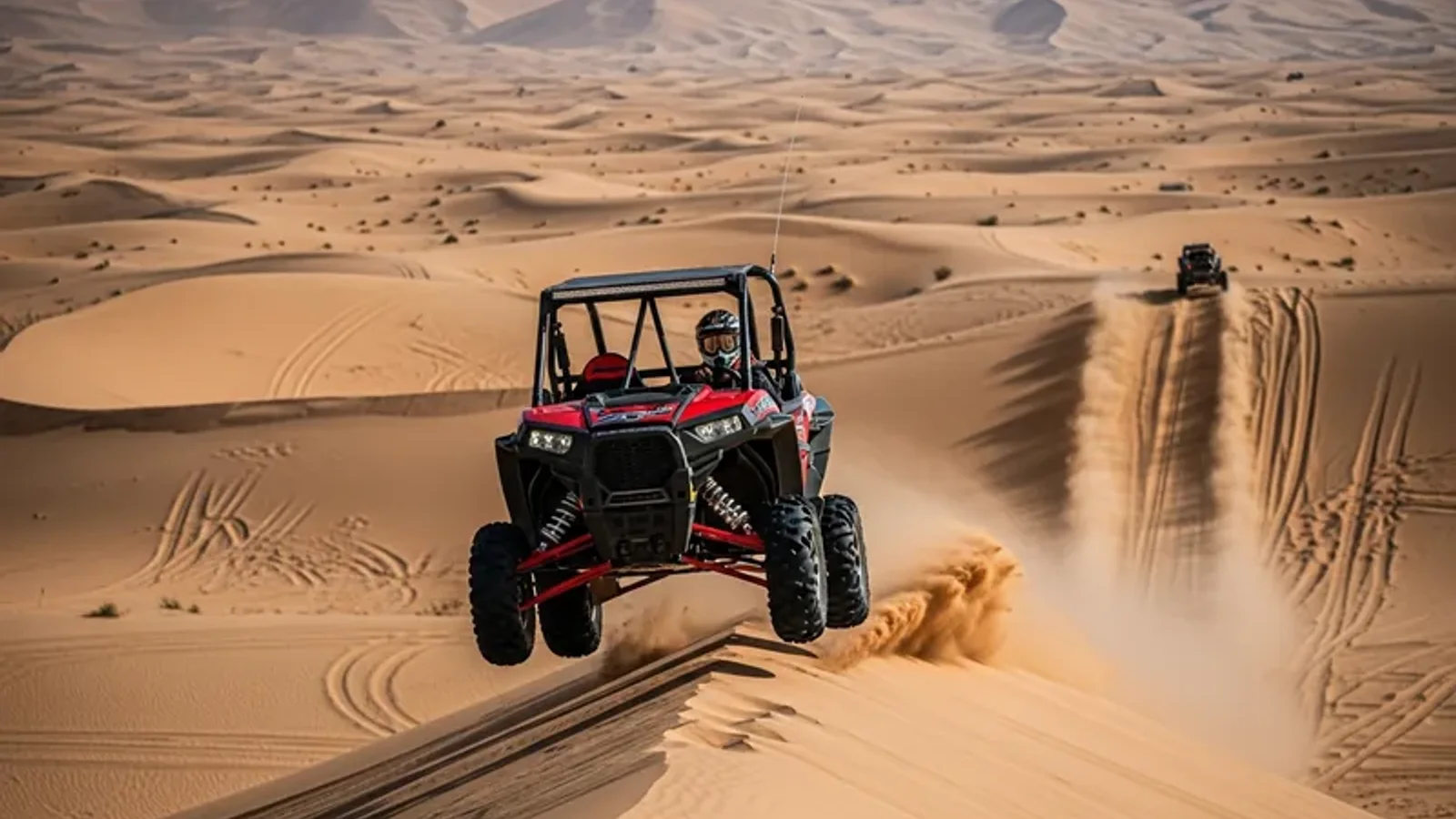
Safety should never be an afterthought. A desert buggy operates in an environment where help can be far away, and conditions change quickly. Look for buggies that come with a roll cage, seat belts, and a secure harness system. The roll cage protects the occupants if the buggy overturns, which can happen on steep dunes or during sharp turns. Seat belts keep everyone inside the vehicle, and a good harness prevents you from sliding around when the terrain gets rough.
Another important feature is the braking system. Desert buggies use hydraulic brakes or mechanical brakes. Hydraulic brakes are more responsive and require less effort to operate, which matters when you need to stop quickly on a downhill slope. Mechanical brakes are simpler but can be less consistent under heavy use. Also check whether the buggy has a kill switch or an emergency shut-off. This is a button or a tether that stops the engine immediately if the driver needs to abort. Experienced riders always verify these features before heading out.
Some buggies include GPS tracking or a radio system that lets the guide communicate with you. While these are not essential, they add a layer of safety, especially if you are riding in a large group or on unfamiliar trails. Do not rely solely on the operator's word. Ask to see the safety equipment and test the seat belts and harnesses before you start.
Driving Licence Requirements and Age Restrictions
Dubai has clear rules for driving a desert buggy. Most rental companies require a valid driving licence. For tourists, an international driving permit or a licence from your home country may be accepted, but it is best to check in advance. Some operators offer guided tours where you follow a lead buggy, and these may have different requirements. The minimum age to drive a buggy is usually eighteen, though some operators allow younger riders as passengers.
If you do not have a licence, some companies provide a passenger option where you ride with a trained driver. This is a common choice for families with children or for people who prefer to enjoy the scenery without focusing on steering. Always confirm the licence and age rules when you book. Showing up without the right documents can ruin your plans.
Speed Limits and Dune Height Considerations
Speed limits in the desert are not just legal restrictions. They are practical guidelines based on the terrain and the visibility. Riding too fast on a dune crest can launch the buggy into the air, which is dangerous even with good suspension. Most guided tours maintain a moderate speed and adjust it based on the dune height and the group's skill level. If you are riding independently, respect the speed limits posted by the operator or the park authority.
Dune height varies across Dubai's desert areas. Some areas have small rolling dunes that are easy to navigate. Others have massive dunes that require careful approach angles and a steady throttle. A buggy that feels stable on low dunes may behave differently on high ones. The centre of gravity, the wheelbase, and the engine power all affect how the buggy handles steep slopes. If you are unsure, start with a lower dune area and gradually build up to more challenging terrain. There is no shame in taking it slow. The goal is to enjoy the ride, not to prove anything.
Wildlife Spotting and Environmental Awareness
The Dubai desert is home to wildlife such as oryx, gazelles, and various bird species. While riding, you may encounter animals crossing the trail or resting near the dunes. Respect their space and do not chase them. A good buggy operator will brief you on wildlife spotting protocols and tell you which areas to avoid during certain seasons. The desert ecosystem is fragile. Staying on designated trails and avoiding vegetation patches helps preserve it for future visitors.
Some tours include stops at scenic viewpoints where you can observe wildlife from a distance. If this appeals to you, choose a buggy that allows easy stops and has good visibility. Open-frame buggies give you a wider field of view, while enclosed models offer more protection from dust but can limit your sightlines. Think about what matters more to you: comfort or connection with the environment.
Practical Tips for Your Buggy Excursion
- Wear clothing that covers your arms and legs. The sun is strong, and the sand can get hot. Long sleeves and pants protect you from both.
- Bring plenty of water. Even a short ride can dehydrate you quickly. Most operators provide water, but it is safer to carry your own.
- Check the weather forecast. Strong winds can reduce visibility and make the dunes unstable. Most tours run in the morning or late afternoon to avoid the midday heat.
- Listen to the safety briefing. The guide knows the terrain and the common hazards. Pay attention even if you have ridden before.
- Inspect the buggy before you set off. Look for any loose parts, low tyre pressure, or signs of damage. If something seems off, ask for a different vehicle.
Choosing the right desert buggy for your Dubai adventure comes down to matching the machine to your needs, your skill, and the conditions you will face. Think about the type of buggy, the engine power, the suspension, and the safety features. Consider the licence requirements and the terrain you plan to tackle. And always respect the desert environment and its wildlife. With the right preparation, a buggy excursion can be one of the most memorable experiences you have in Dubai.